
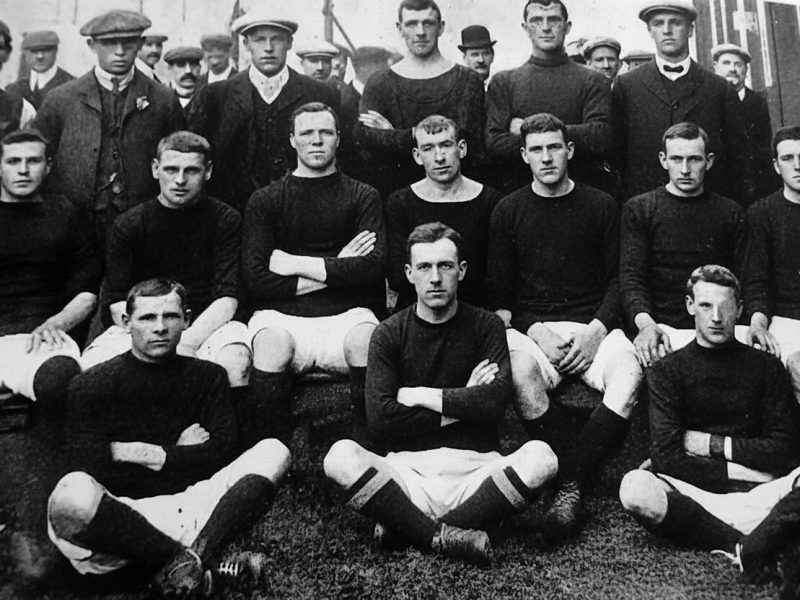
A local hero:
Bill Demmery
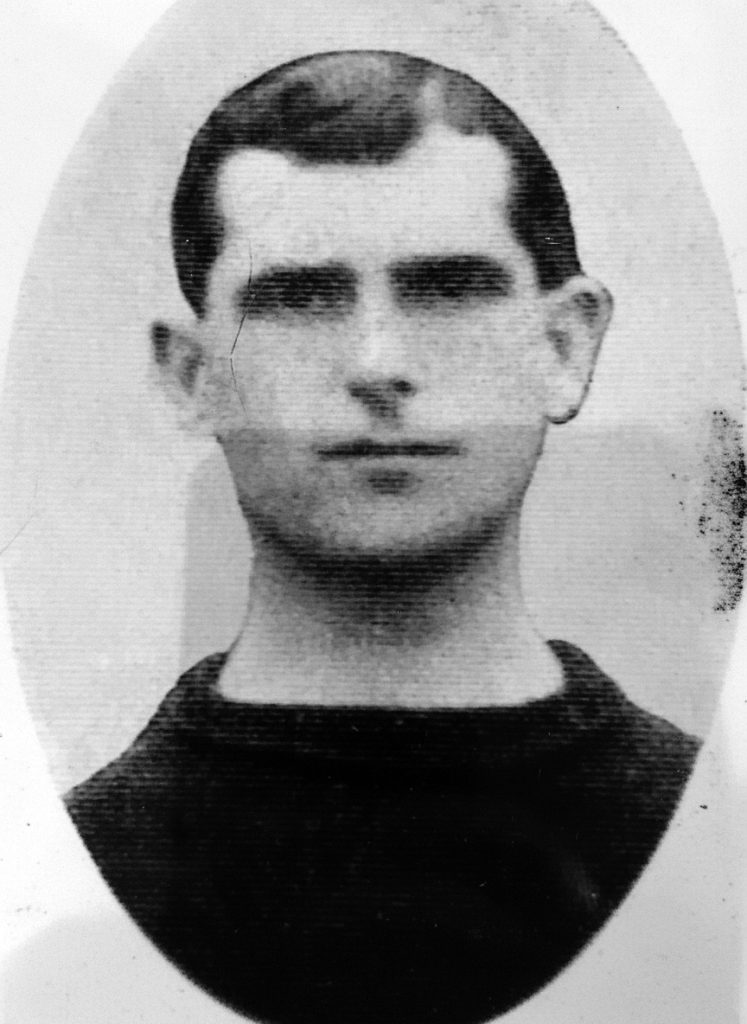
JENNY Alcock writes about a relative who put his renowned goalkeeping talents to an unusual use – to save a young boy’s life in Staple Hill
BILL Demmery was my great uncle.
He was born in Kingswood in 1876. His family had relocated from South Wales to establish a shoe and boot-making business, which operated a factory and shop in Staple Hill.
Boot-making was a significant employment source in the Kingswood area of Bristol.
At the beginning of the 20th century, Kingswood boot and shoe factories employed over 11,000 workers, making it the third largest centre for boot making in the United Kingdom.
From a young age, Billy was involved in the shoe trade. Upon completing his schooling, he was duly apprenticed to become a cordwainer (making shoes from new leather) and cobbler (repairing and altering shoes) in the family business.
However, Billy’s true passion lay in football, where he played as goalkeeper for his local amateur clubs, Warmley (1894-7), Staple Hill (1897-8), and Bristol East (1899-1905).
His significant breakthrough came in 1905, when he was signed by Bristol City and made his debut against Manchester United in the Football League.
He went on to play in 32 League games, helping Bristol City achieve their highest ever League finish, reaching the FA Cup Final and finishing in second place.
In 1908 he joined Bristol Rovers, where he played for two seasons.
In his senior career he represented various Welsh clubs, including Aberdare, Treharris, and Douglas, before retiring from the sport in 1919, at the age of 42.
Billy became a local hero when he fearlessly saved the life of a young boy in Staple Hill.
A local rhyme was commonly sung by children, which went as follows:
The boy was on the tramlines,
The driver rang the bell,
The tram went on to Staple Hill,
The boy to Arnos Vale.
This rhyme would have come true had it not been for Bill Demmery.
A young boy with no road sense was indeed on the tramlines and quite unaware of the approaching tram, on its way to the terminus.
There was no way that the tram could stop in time at the speed it was travelling. It seemed that a tragedy was inevitable.
Whatever could be done? Bill knew what to do. Quickly, he ran out of his shop, delivered one of his famous goal kicks to the boy, and landed him on the other side of the street. Then he ran on behind, narrowly missing the tram!
Already famous as a professional footballer, Bill quickly rose to the status of a local hero and subsequently became a celebrity within the Staple Hill community.
At the end of his football career, Bill returned to Bristol and continued in the shoe and boot trade until his retirement.
He passed away in 1952 and was cremated at Arnos Vale.
I am indebted to my father’s autobiography, “Ralph Pritchard: Memories of My Early Years,” for providing the account of William and the boy on the tram lines.
Downend Community History and Art Project (CHAP) is a not-for-profit voluntary organisation that aims to create a coherent identity for Downend and Emersons Green, built around interesting or significant places, people and events from the past, and run activities to bring history to life for the community.
To get in touch visit www.downendchap.org, email big.gin@yahoo.com or write to CHAP, 49 Overnhill Road, Downend, Bristol, BS16 5DS.