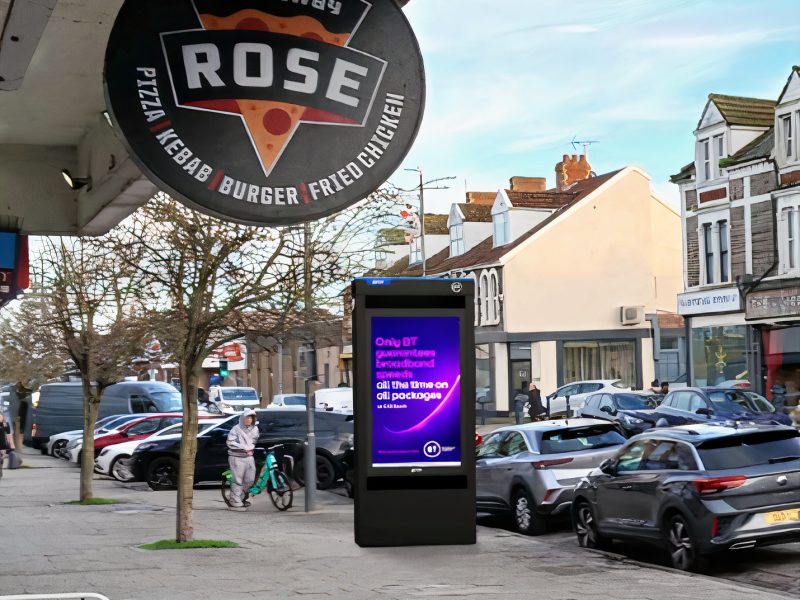
A NEW digital advertising screen that would have blocked the pavement in front of a church in Staple Hill has been refused planning permission.
Communications giant BT applied to install the ‘street hub’ on the pavement in Broad Street, in front of the Salvation Army.
But a ward councillor warned that putting it there would lead to wedding and funeral processions turning into “some sort of Benny Hill ending” as people tried to move around the hub.
Street hubs provide a free way for people to access the internet and make calls, but take up space on the pavement and show adverts.
The church objected to the plans, which were refused by South Gloucestershire Council’s development management committee in late July.
Paul Campbell, from the Salvation Army, said: “The proposed location of the unit, we feel, will restrict access at the road frontage for weddings and funerals at our church.
“The location will also cause congestion when we use the street frontage that is within our ownership before services and at community events.”
The Salvation Army band plays on the pavement outside during events like Christmas on the Hill, when it can become congested for passers-by.
Mr Campbell said access for emergency services was another concern, and the nearby greengrocer also uses space in front of its building to display fruit and veg, further restricting space for pedestrians.
Staple Hill & Mangotsfield ward councillor Ian Boulton said: “That pavement can become extremely busy. To have this piece of street furniture here is a genuine concern.
“Absolutely, we would love to have a hub somewhere, it’s just not necessarily at this location that they seem determined to go for.
“Trying to get a coffin and the attendees during a funeral to slalom around this is something that I wouldn’t want to see.
“We have weddings and funerals, and having people going round like some sort of Benny Hill ending, where people are all going around in a snake-like attempt to get to the entrance, is something I think we would want to avoid.”
As well as two digital advertising screens, BT said the street hub would provide free public WiFi, free UK telephone calls, USB charging, public information and emergency messages.
Street hubs have been popping up on high streets across the country, with BT providing them instead of phone boxes.
Nobody from BT attended the committee, but in planning documents its architects said: “BT is continuing to move forward with public connectivity and benefits, in which Street Hubs will provide a sleek and modern answer to the demands of a digitally-connected society.
“Street Hubs will help future-proof the high street making them smarter, safer, and more sustainable.”
By Alex Seabrook, Local Democracy Reporting Service