Devils’ toenails found in Downend
WAY back in 1967, when I was a young girl, we used to play in the fields around Baugh Farm.
We explored Bluebell Wood, the May Den, Stinker’s Swamp and Grandmother’s Leap.
Emerging after breakfast at weekends and holidays, we only went home when we were hungry, then out again till dusk.
One of our favourite haunts was the Sewage Farm, near the Bromley Heath Playing Fields.
It was from here that we saw the big mechanical diggers arrive which heralded the building of the M4 motorway through our territory.
Inevitably, the building site became our playground in the evenings and weekends. It always seemed to be wet, with huge sheets of mud that cracked and broke open, revealing row upon row of long, gnarled stones which we collected and proudly took home.
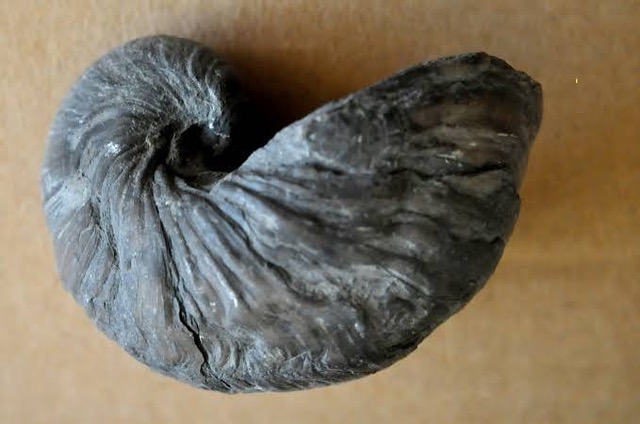
A visit to Downend Library identified the stones as gryphaea, an extinct genus of oyster, commonly known as devils’ toenails.
They lived 174 to 190 million years ago, during the Jurassic period, when Downend’s location would have been submerged in a shallow sea.
They were named because the large curled-bottom shell looks like a gnarled, oversized claw or toenail.
Unlike modern oysters that glue themselves to rocks, gryphaea lived in large colonies on soft, muddy sea floors.
The shell’s large, curled bottom acted like the hull of a boat, stopping the animal from sinking into the mud.
Made of tough calcite mineral, the shells survived erosion and became preserved in sedimentary rock as fossils.
Old English superstition claimed these fossils were nail clippings from the Devil.
In medieval times, tradition held that carrying one as a charm could prevent rheumatism and joint pain, and they were also ground up to make medicine for arthritis.
Gryphaea fossils are a time capsule from the ancient oceans, giving us a fascinating glimpse into how bivalves evolved and what the environment was like back then.
During the Jurassic period, Britain was a patchwork of warm, shallow seas, islands and lush lowlands that supported a rich variety of dinosaurs, marine reptiles and flying creatures.
When these dinosaurs roamed the Earth, roughly 205 to 210 million years ago during the late Triassic period, the region around Bristol was not a rolling green landscape but a tropical archipelago of small limestone islands, surrounded by warm seas.
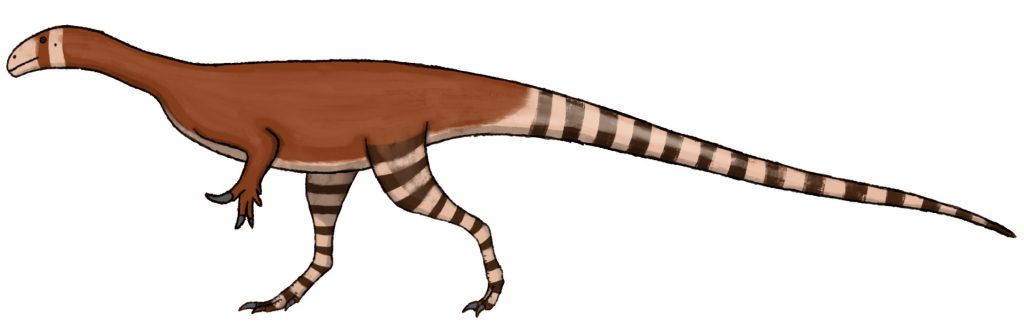
The most famous dinosaur found in Bristol is thecodontosaurus antiquus (or Theco as Bristol Museum have named him).
His bones were originally found near the old Bristol Zoo in 1834.
In 1975, the remains of at least 11 other individual dinosaurs were uncovered in a quarry at Tytherington, near Thornbury.
Research has revealed that herds of Thecodontosaurus roamed the Bristol area about 210 million years ago. At a maximum of 2.5 metres it was a modest sized dinosaur, with a thick muscular tail and sharp thumb claws. It was one of the first plant-eating dinosaurs to evolve, a predecessor of the diplodocus.
To view the real specimens, interactive exhibits and a life size reconstruction of Theco, visit the geology department at Bristol Museum.
Downend Community History and Arts Project (CHAP) aims to create a coherent identity for Downend and Emersons Green, built around interesting or significant places, people and events from the past.
For more details visit www.downendchap.org, email big.gin@yahoo.com or write to CHAP, 49 Overnhill Road, Downend, Bristol, BS16 5DS.
Jenny Alcock