
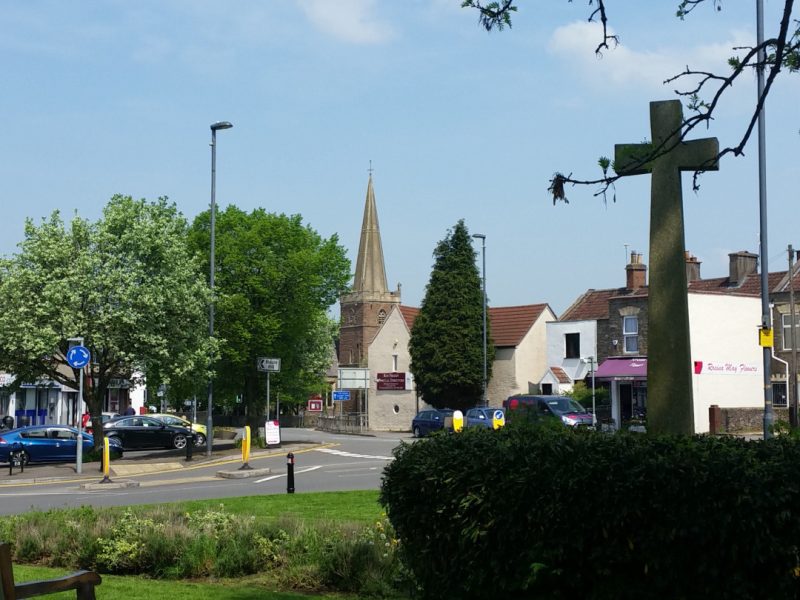
A NEW study by Bristol historians has shown that people in Mangotsfield and other rural areas in the 17th century suffered less from the plague than their city counterparts.
Former Bristol University undergraduate Matthew Kilner carried out the study as part of his history dissertation, beginning his research during the COVID-19 pandemic.
Drawing on material in the Bristol Archives, he explored how the bubonic plague of 1603 spread to Bristol, going on to kill about 2,500 people – a fifth of the city’s population at the time.
Matthew compared parish burial records for the centre of the city with then-rural parishes, including Mangotsfield, Brislington and Henbury.
His research has been published in the academic journal Local Population Studies.
Matthew found that, despite the city council in Bristol imposing quarantines on people travelling from infected cities, disinfecting goods and forcing sick people to stay in their homes – known as ‘locking up’ – within months of the first outbreak in London, hundreds of people were dying in the city each week.
By contrast, in Mangotsfield and the other areas the records showed no effect from the plague at all, suggesting that rural communities were able to effectively isolate themselves, quarantining from the outside world.
Matthew, who is now a history teacher, said: “People often think of Plague as being a disease of the poor but that’s not necessarily true. Rich areas and poor areas were hit.”
By the time of 1665’s Great Plague, Bristol had developed a stronger response, banning public gatherings and establishing isolation hospitals, which helped prevent another major outbreak.
Bristol University associate professor in economic history Dr Evan Jones, Matthew’s dissertation supervisor, said: “The most enduring legacy of Plague, which devastated Britain many times between 1348 and 1665, was that it set the conditions for how we deal with outbreaks.
“Students often remark on how similar the reaction to COVID-19 was to the reaction to Plague, but it’s not a coincidence.
“While much has changed, in the face of a poorly understood disease and without effective treatments, the approach is still fundamentally the same: ‘isolation, isolation, isolation’.”
While Mangotsfield’s residents managed to avoid the plague, they were not safe from disaster: Dr Jones said the worst year for deaths in the village over the period was 1597, which followed a failed harvest the previous year, and was probably due to famine.
Grain prices rose and rural communities suffered because they didn’t have the money to buy enough food from elsewhere.